Recycling and Sustainability for Garden Clearance Shortlands
Garden Clearance Shortlands is committed to delivering an eco-friendly waste disposal area and a truly sustainable rubbish area when we clear gardens across Shortlands. Our approach balances practical clearance with a focus on reuse, recycling and low-carbon logistics. We work to ensure that every hedge, shed or broken patio is handled with circular-economy principles in mind, reducing landfill contribution and supporting borough-wide waste separation schemes.Our Recycling Percentage Target and Commitments
We have a clear recycling percentage target: 70% of all garden waste and reusable items diverted from landfill within 12 months of clearance. That target covers green waste, timber, metal, inert material suitable for crushing and reuse, works of salvageable garden furniture, and items that charities or social projects can redeploy. The Shortlands garden clearance team tracks loads and reports on recycling rates, striving for continual improvement toward a higher circularity rate each year.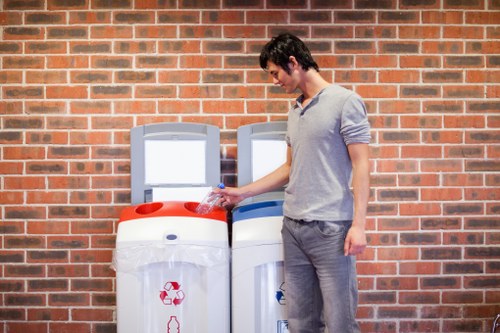 We align with the local boroughs' approach to waste separation — encouraging clients to separate green waste, food/compostable material, rigid plastics, glass and textiles where practical prior to collection. This mirrors the local council's guidance on kerbside separation and civic amenity practices, so that materials arriving at transfer stations are already maximally sorted for processing and reuse.
Local Transfer Stations and Resource Recovery
Garden waste and mixed materials collected by our Shortlands teams are taken to approved local transfer stations and resource recovery centres. We routinely use the borough's household waste recycling centres and designated transfer hubs that operate mechanical sorting, composting lines and timber recovery. These local transfer stations are selected for their strong environmental controls and ability to separate compostable green waste from soils and inert aggregates for reprocessing into compost, mulches and recycled sub-base material.Our service model emphasises reuse in addition to recycling. Where possible we salvage live plants, paving slabs, bricks and garden furniture for redistribution. In practice this means a structured hand-off process with partner organisations and a clear internal audit to make sure the rubbish area on site becomes a source of raw material rather than a destination for waste.
 We maintain partnerships with several local and national charities and reuse organisations to give good items a second life. Typical partners include furniture reuse charities, community allotments, and social projects that accept usable tools and timber. Items that can’t be reused are passed to specialist recyclers for metal, timber chipboard separation and inert crushing.
 Sustainability in our vehicle fleet is a visible part of our work. Our low-carbon vans — electric and hybrid models — are used for smaller clearances and local runs. For larger jobs we deploy Euro-6 compliant vehicles and continually invest in route optimisation software to reduce mileage and idling time. We also trial e-cargo bikes for small deliveries and community drop-offs to lower emissions in dense neighbourhoods like Shortlands High Street.
To keep operations efficient and green we operate with a few key practices:
- Segregation on-site — keep compostables and recyclables separated from mixed loads.
- Pre-sorting — reuseable items are boxed for charity pick-up or drop-off at reuse hubs.
- Low-carbon logistics — electric vans and efficient routing for multi-stop services.
 Our approach to a sustainable rubbish area goes beyond collection: we actively audit outcomes and set measurable targets for improvement. Regular reporting sessions review how many tonnes of green waste become compost, how much timber is reclaimed versus chipped, and the percentage of items successfully rehomed via charity routes. This level of transparency supports continual improvement and community confidence in how garden clearance waste is handled in Shortlands and surrounding boroughs.
The Garden Clearance in Shortlands ethos also includes community education: we explain simple steps homeowners can take to separate and prepare materials for collection — for example, emptying soil from pots into compostable bags, keeping treated timber separate, and stacking bricks and paving for easier reuse. These light, actionable steps increase the likelihood that materials are recovered and not sent to landfills.
We measure performance not only by the percentage recycling target, but by the quality of material returned to the resource stream. This means fewer contaminated loads, higher-grade compost from green waste, and better-value reclaimed materials for local projects. By cooperating with borough waste strategies, local transfer stations, charities and low-carbon transport solutions, our Shortlands garden waste removal service helps build a stronger, cleaner local circular economy.
Choosing Garden Clearance Shortlands means choosing a partner that makes the local sustainable rubbish area a priority: strong reuse pathways, ambitious recycling percentage targets, collaboration with transfer stations and charities, and continuous investment in low-carbon vans and improved operations. Together we keep Shortlands greener — one cleared garden at a time.